1. Aperitivo and Night Out in Naples: From the Books of Port’Alba to the Heart of Piazza Bellini
Experience Naples by night: immerse yourself in a ritual of outdoor socializing, conversations in the narrow alleys, and illuminated vistas that reveal centuries of history. By staying at Le Stanze di Dante on Via Avvocata, you are less than a five-minute walk from one of the hubs of Neapolitan nightlife.
No need for taxis or complicated routes: simply walk down to Piazza Dante, pass through the 17th-century Port’Alba arch, and follow the atmosphere.
First Stop: The Literary Aperitif at Port'Alba (2-minute walk)
As soon as you step through the ancient city gate: amidst stalls of antiquarian books and vintage editions...
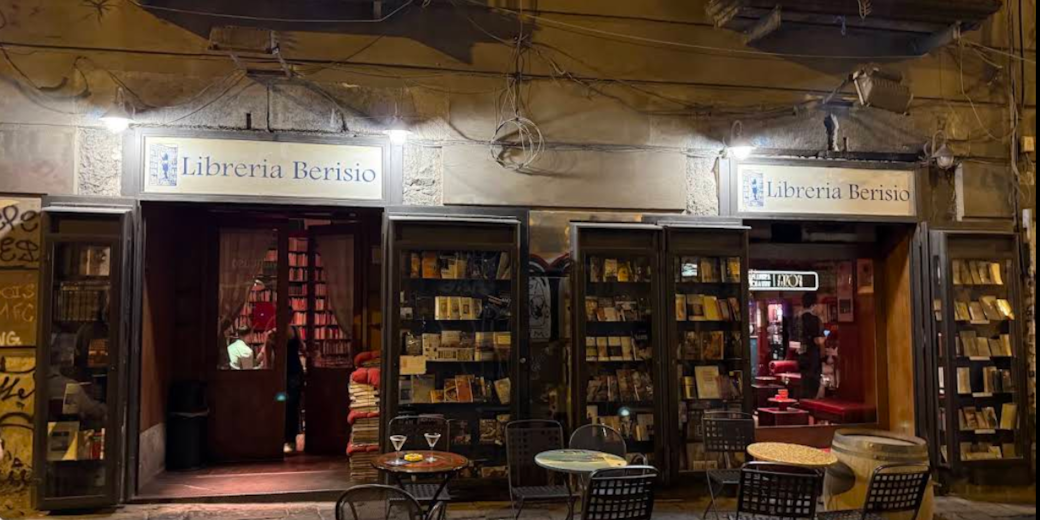
Libreria Berisio (Via Port'Alba, 28): A historic bookshop by day, and a cocktail bar with unique charm by night. Walls lined with vintage volumes, soft lighting, and an excellent selection of cocktails and spirits for a relaxing start to the evening.
Second Stop: The Piazza Bellini Lounge (4-minute walk)
Once past Port'Alba, you find the heart of Naples' nightlife, where students, artists, and travelers gather around the remains of 4th-century BC Greek walls.
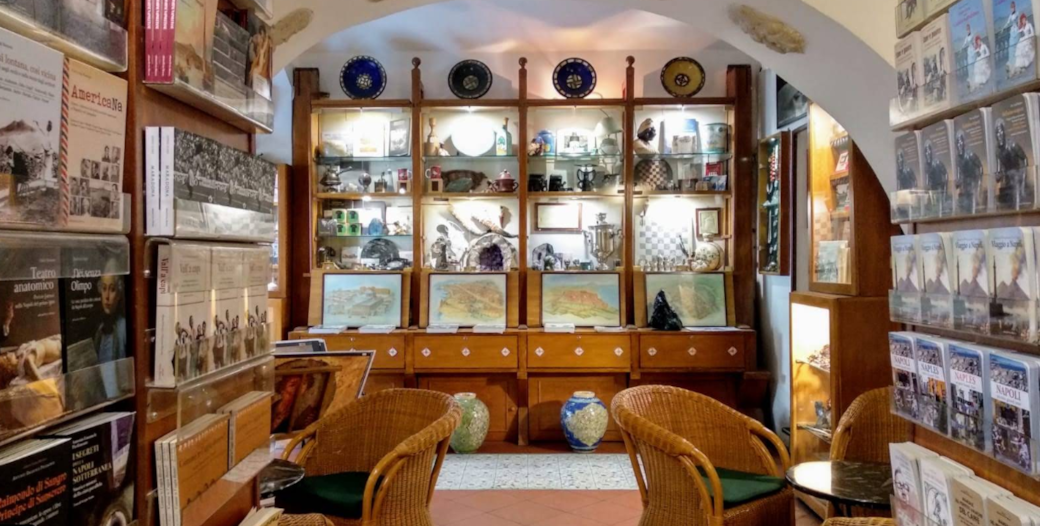
Intra Moenia Literary Café: a historic landmark for those who love sitting outdoors amidst trees and ancient walls. It is the perfect spot for a glass of wine from Campania (be sure to try the Greco di Tufo or a local Aglianico) or a spritz, accompanied by platters of local cured meats and cheeses.
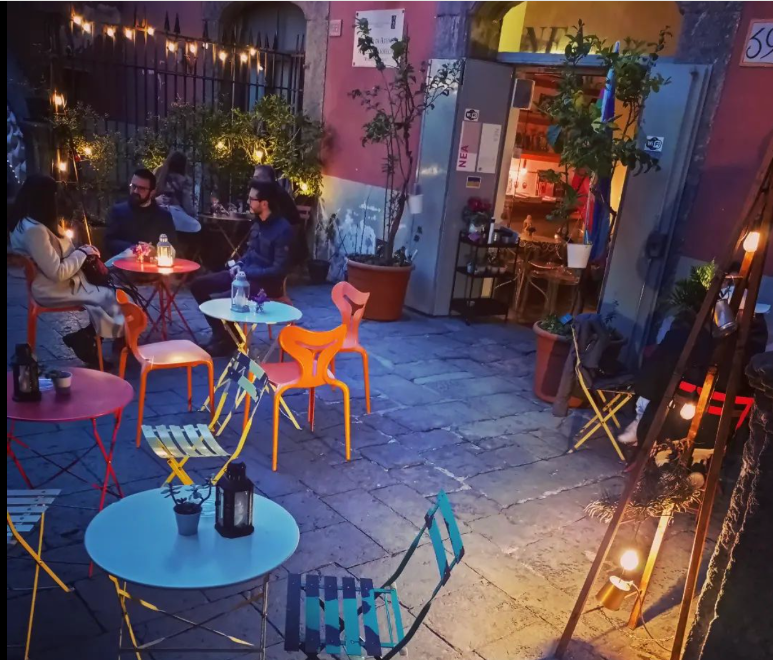
Spazio Nea: Located on the steps connecting the square to the Academy of Fine Arts, it combines a contemporary art gallery with an open-air bistro—offering excellent cosmopolitan drinks.
The Night Is Young: Soft Jazz or Signature Mixology
Aperitivo as a prelude to the night: the evening fades into the night with music or sophisticated drinks before heading home.
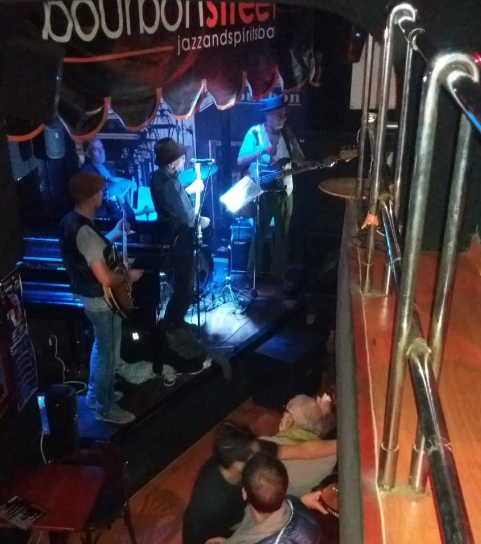
Bourbon Street Jazz Club (Via Bellini, 52): Just a few meters from Piazza Bellini, a venue inspired by New Orleans clubs, featuring live jazz performances and a lively, informal atmosphere.
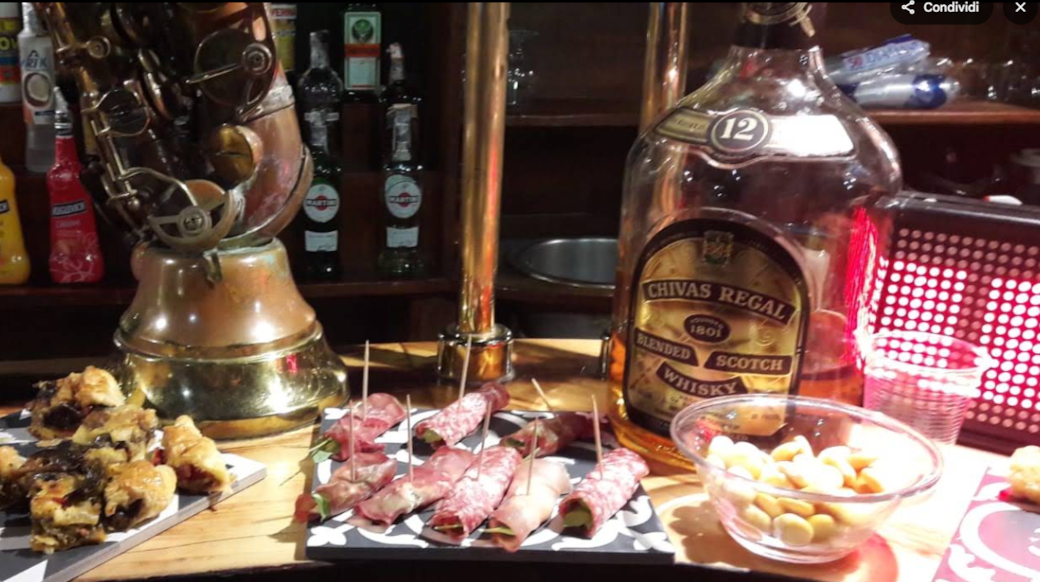
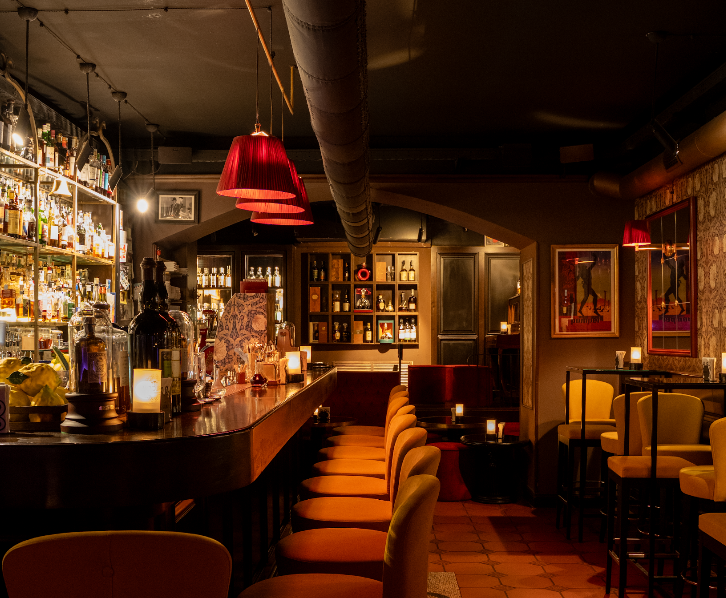
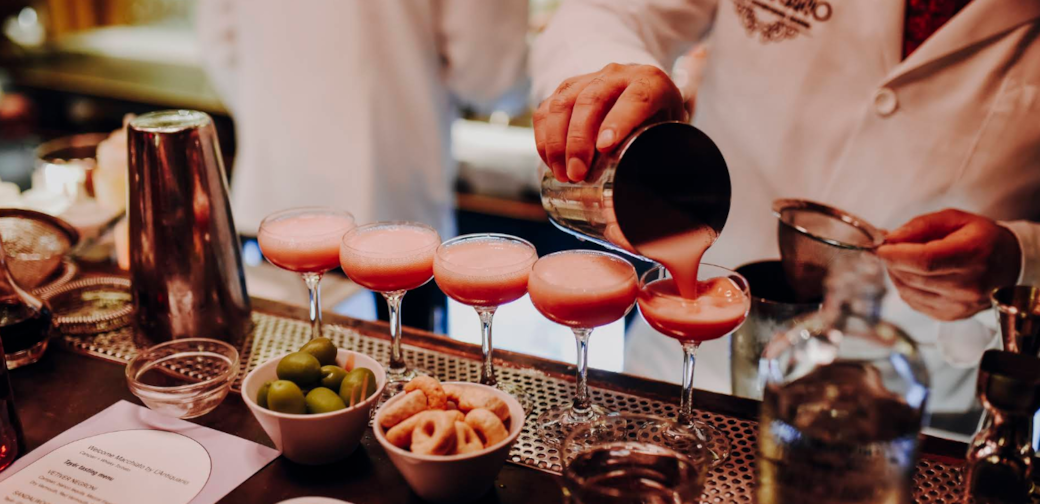
L'Antiquario (Via Vannella Gaetani, 2): For lovers of speakeasies and high-end mixology (accessible via a short taxi ride to the Chiaia district). It features a 20's atmosphere, red velvet décor, and a world-class cocktail menu.
Enjoy!
2. Art and Culture in Naples: What to See in Two Days Starting from Piazza Dante
Naples encompasses over two and a half millennia of historical layers; to grasp the depth of this history without feeling overwhelmed by the distances involved, the order of your itinerary is crucial.
When staying at Le Stanze di Dante on Via Avvocata, your starting point is already in the heart of the ancient city: from here, all the major museums and monuments can be reached on foot or with just a couple of metro stops.
DAY 1: From MANN Museum to Centro Antico
Morning: The Great Archaeological Beauty (a 5-minute walk away)
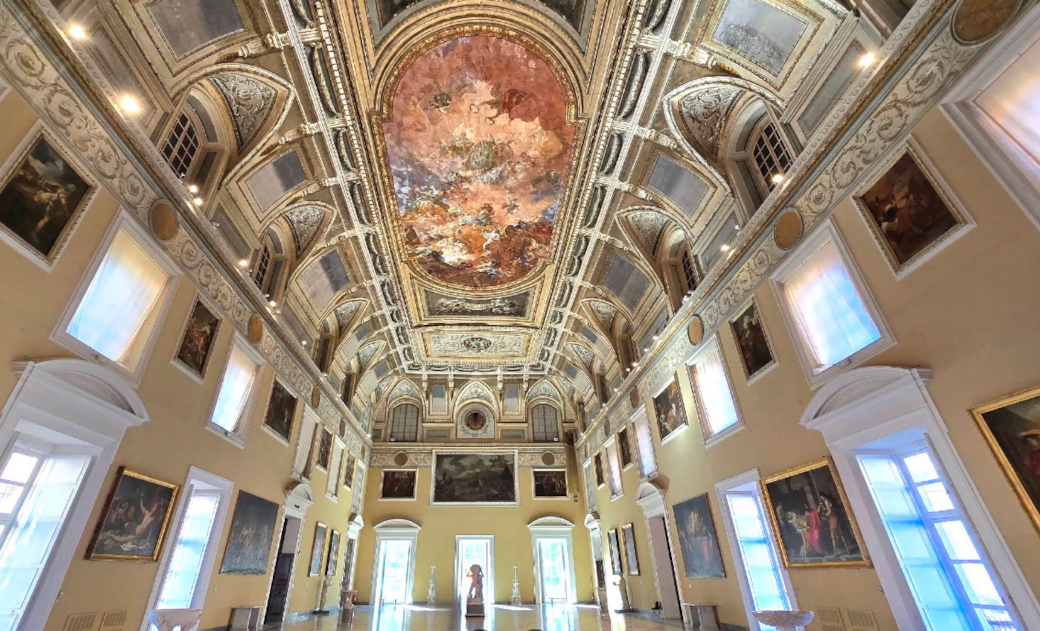
Museo Archeologico Nazionale di Napoli (MANN): Located about 300 meters from the apartment—heading up from Piazza Dante towards Piazza Museo—the museum houses one of the world's most important Greco-Roman collections: the statuary of the Farnese Collection (including the *Farnese Hercules* and the *Farnese Bull*), mosaics from the excavations of Pompeii and Herculaneum, and an extensive Egyptian section.
- Duration of the visit: 2 hour and half.
- https://www.museoarcheologicon...
Lunch break: A quick snack—a folded pizza—on Via dei Tribunali or in Piazza Bellini.
Afternoon: Spaccanapoli, the Duomo, and the Sansevero Chapel (a 7-minute walk away)
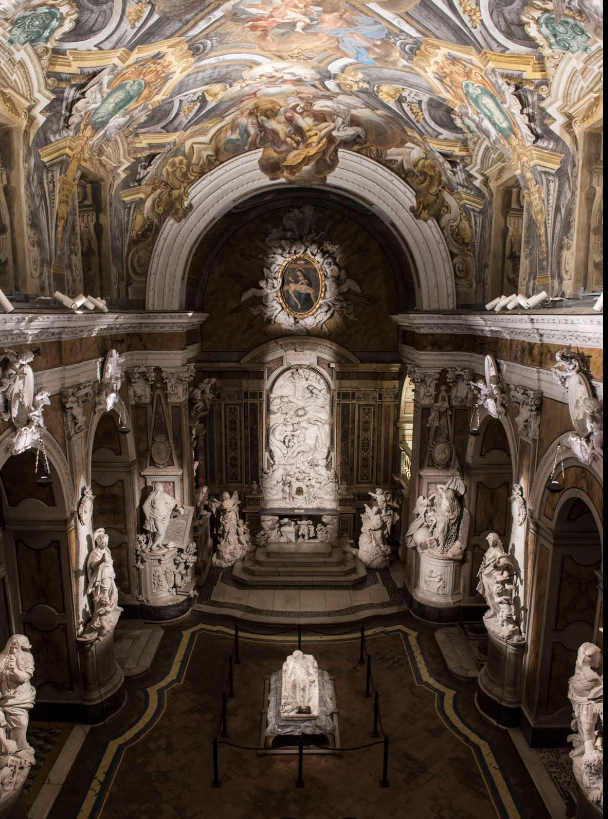
The Sansevero Chapel and the *Veiled Christ*: Walking down from Port’Alba towards San Domenico Maggiore. Sanmartino’s *Veiled Christ* (1753) is one of the greatest sculptural masterpieces of all time. Since the 18th century, travelers of varying renown—including Antonio Canova, the Marquis de Sade, Matilde Serao, and countless others—have come to gaze upon this artistic miracle, left both astounded and captivated.
- Practical tip: Booking tickets online well in advance is essential.
- https://www.museosansevero.it/
- https://maps.app.goo.gl/pUF28E...
For enthusiasts of the mystery and legend of the Prince of Sansevero:
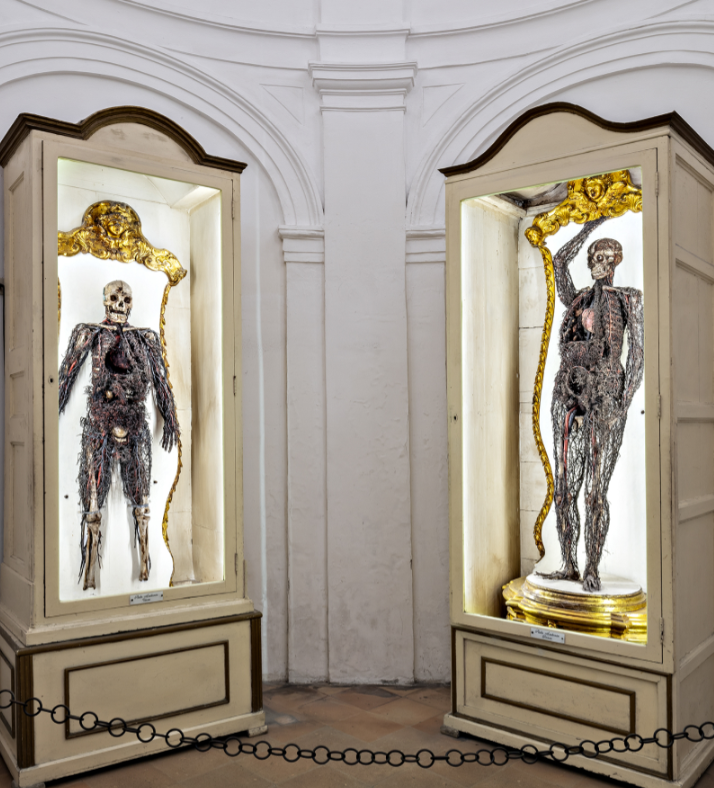
The famous "Anatomical Machines"—or anatomical studies—are currently housed in two display cases within the underground chamber of the Sansevero Chapel; these consist of the upright skeletons of a man and a woman, featuring an almost perfectly intact arteriovenous system. The Machines were created by the physician Giuseppe Salerno, a native of Palermo.
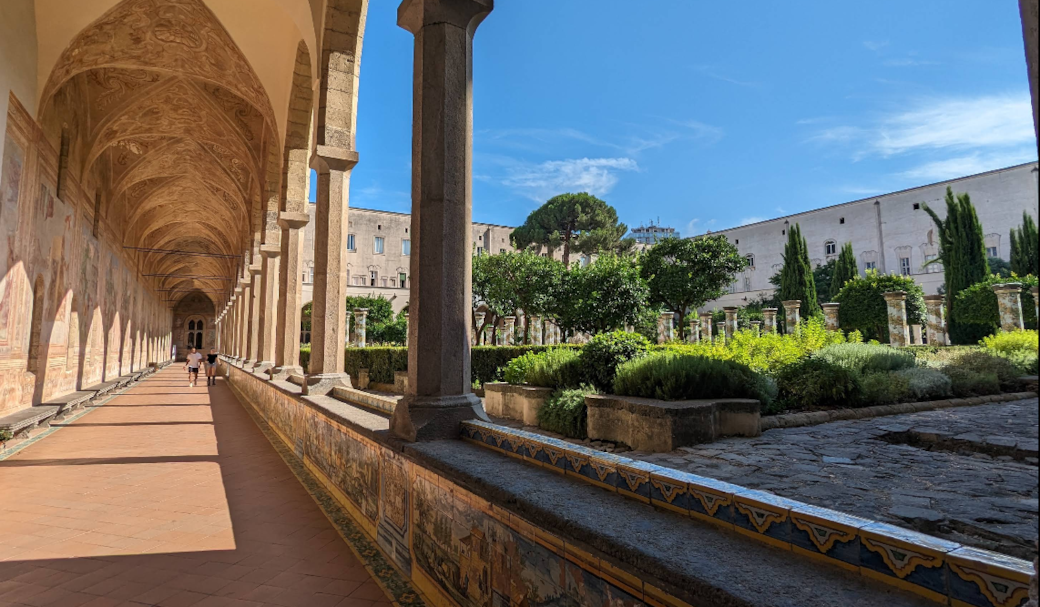
Santa Chiara Monumental Complex: The 14th-century majolica cloister, decorated with famous 18th-century tiles featuring floral and pastoral motifs, offers an oasis of silence away from the clamor of Spaccanapoli.
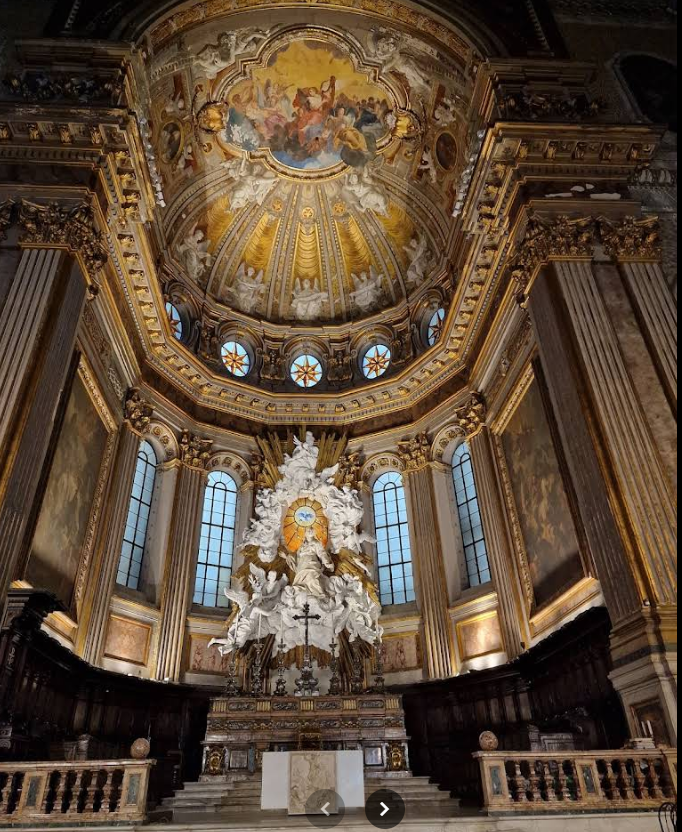
Duomo di Napoli and the Treasury of San Gennaro: Continue along Via dei Tribunali to Via Duomo to admire the Cathedral and the Royal Chapel of the Treasury—a Baroque masterpiece housing the relics and vials of the patron saint.
Naples Cathedral was founded in 1272 by King Charles I of Anjou and completed in 1313 during the reign of Robert of Anjou. The interior houses numerous works of art; highlights include an altarpiece by Perugino, the Minutolo Chapel, and the Chapel of the Illustrissimi—the latter two featuring Gothic architecture and walls entirely covered in frescoes.
https://maps.app.goo.gl/SbnFaT...
https://maps.app.goo.gl/9myTJg...

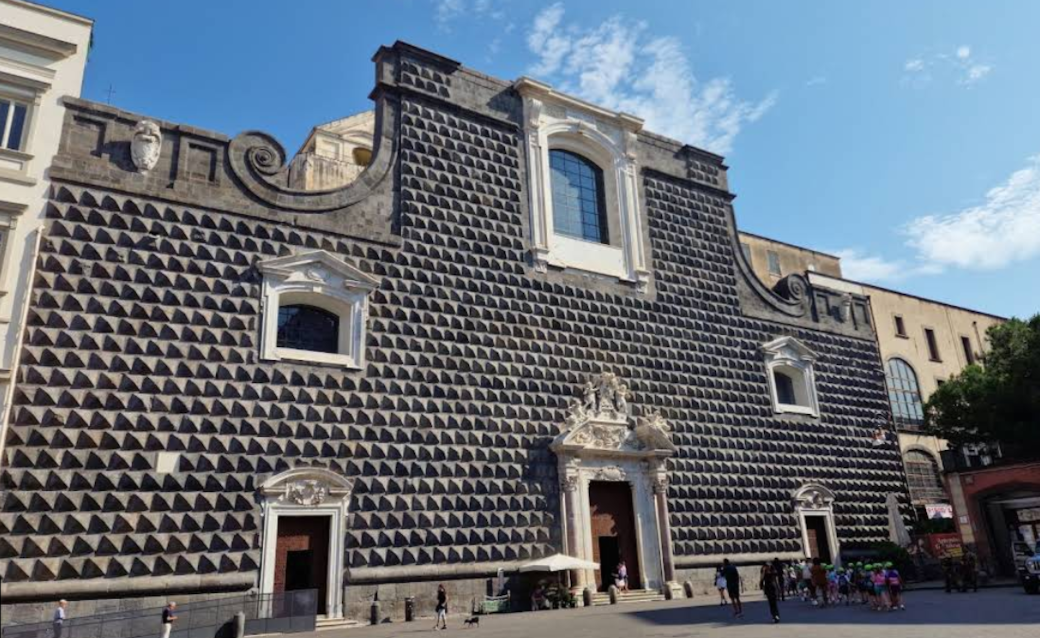
The Church of Gesù Nuovo in Naples originated from the transformation—begun by the Jesuits in 1584—of the pre-existing Palazzo Sanseverino (1470); it retains the palace's imposing *piperno* stone façade, featuring "diamond-point" rustication.
The interior stands as a supreme example of Neapolitan Baroque. It is richly adorned with polychrome marbles, sculptures, and fresco cycles created by leading masters from the local school and beyond, including Cosimo Fanzago, Giovanni Lanfranco, Aniello Falcone, and Paolo De Matteis.
The mystery of the rustication: cryptic signs are carved into the *piperno* stone pyramids on the façade. The historical explanation holds that these are quarry marks used by stonemasons to identify their work. Esoteric legend, however, claims they are alchemical or magical symbols intended to channel positive energy into the building. Popular belief held that the stones had been installed upside down, thereby attracting misfortune and confiscation upon the original owners (the Sanseverino family).
The musical hypothesis: a contemporary theory interpreting the signs as Aramaic letters corresponding to musical notes, effectively creating an open-air musical score.
Day 2: From the Quarters of Faith to Royal Naples
Morning: The Rione Sanità district and the Catacombs of San Gaudioso (a 10-minute walk away)
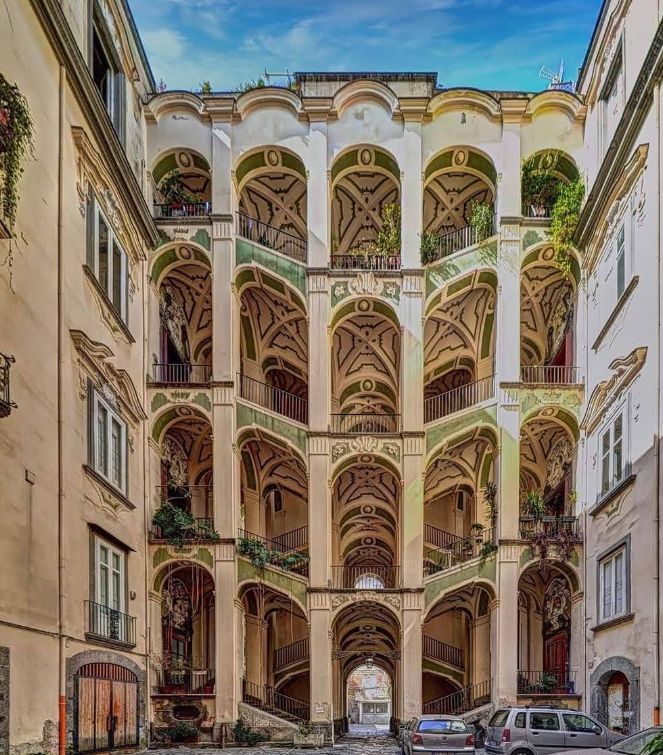
La Sanità e Palazzo dello Spagnolo: Crossing the Sanità bridge on foot from the MANN, you enter the neighborhood where Totò was born—an area famous for its dramatic, double-flight Baroque staircases (Palazzo dello Spagnolo and Palazzo Sanfelice).
https://maps.app.goo.gl/YVAhrb...
La Basilica di Santa Maria della Sanità is considered one of the most ambitious projects by the Dominican architect Fra Nuvolo. The basilica was built between 1602 and 1610. Its distinctive feature is the dome covered in yellow and green majolica tiles—a landmark known throughout the city, as it is immediately visible when crossing the Sanità Bridge.
https://maps.app.goo.gl/7s9mqw...
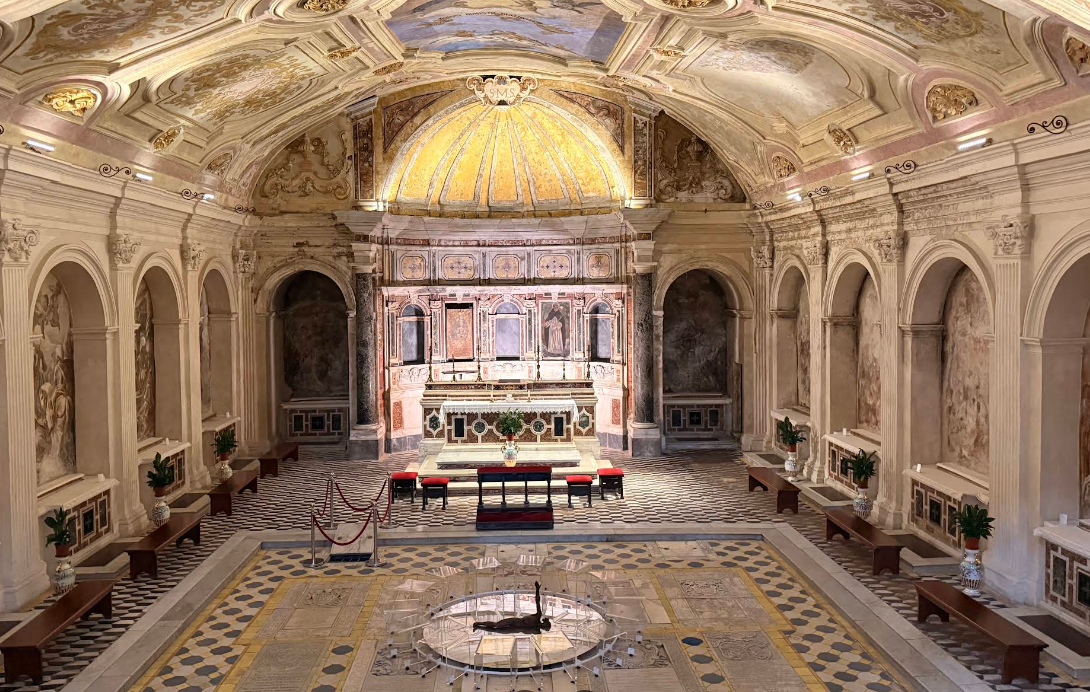
In the Catacombs of San Gaudioso, beneath the Basilica of Santa Maria della Sanità, one delves into the ancient Neapolitan cult of death and the afterlife, featuring Early Christian frescoes and the evocative drainage niches (*scolatoi*) used by the 17th-century nobility.
Pomeriggio: Da Via Toledo al Palazzo Reale
From your accommodation or Piazza Dante, it is just a pleasant walk down Via Toledo (about 15–18 minutes on foot) or a quick two-stop ride on Metro Line 1, getting off at the famous art stations of Municipio or Toledo. Don't forget to make a brief stop at the historic Galleria Umberto—perhaps for a *sfogliatella* pastry at Mary’s. From there, continue on to the spectacular setting of Piazza del Plebiscito.
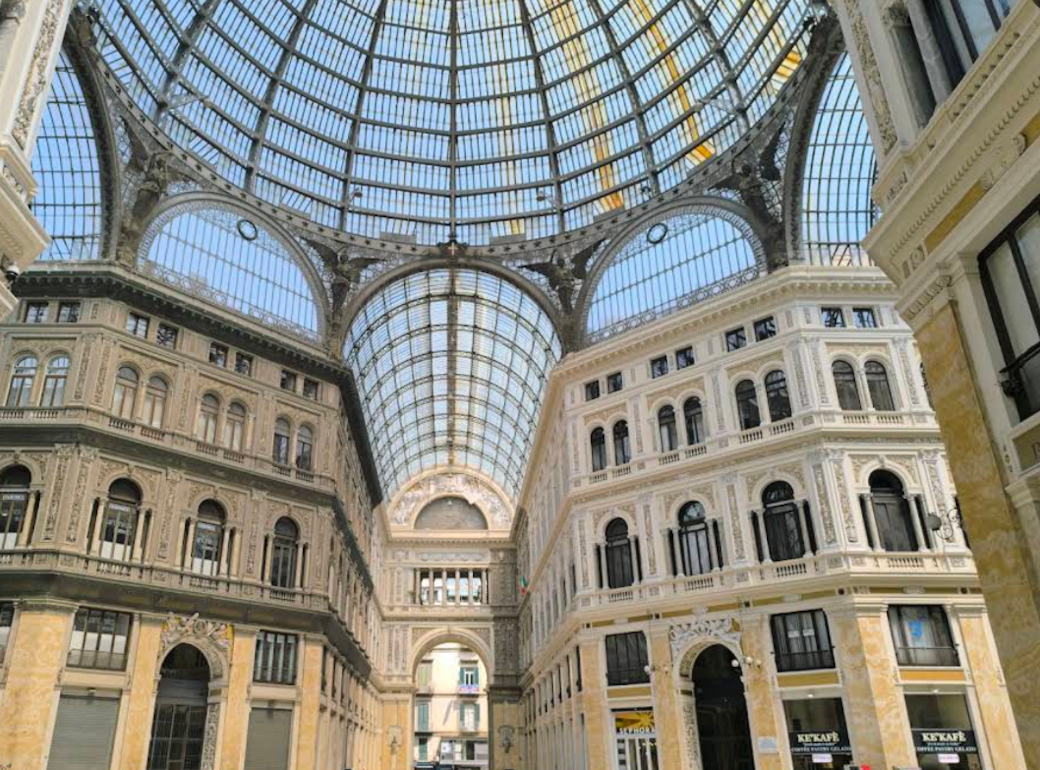
Built between 1887 and 1890 as part of the urban renewal of Naples (*Risanamento*), the Galleria Umberto I is a monumental shopping arcade designed in the Umbertine and proto-Art Nouveau styles; it was named after the monarch in recognition of his support during the 1884 cholera epidemic.
Designed by Emmanuele Rocco, it features an orthogonal cross-shaped layout with four entrances (including those on Via Toledo and Via San Carlo). The intersection of the arms is covered by an imposing iron-and-glass dome—57 meters high and designed by Paolo Boubée—rising above a mosaic floor depicting the signs of the zodiac. A historic social hub, it was home to famous cafés and the Salone Margherita.
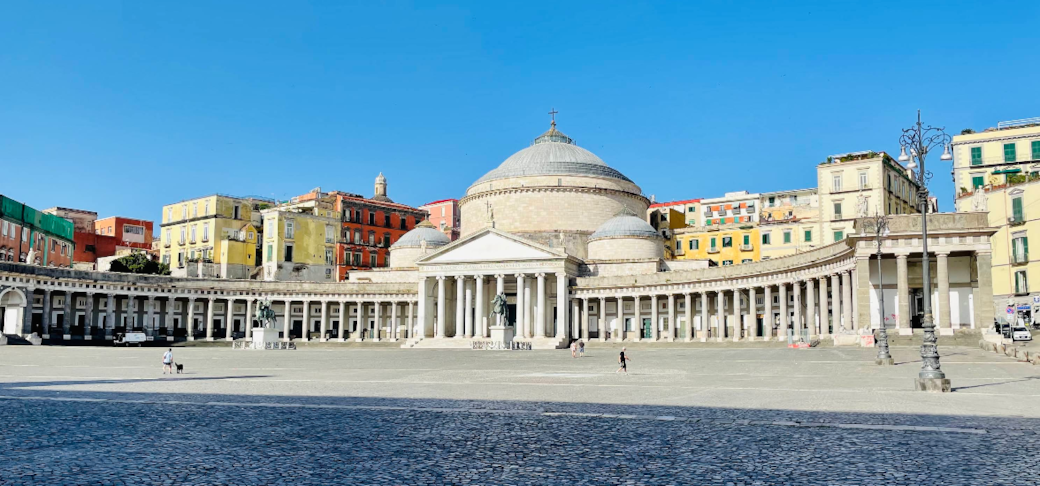
Piazza del Plebiscito (covering approximately 25,000 m²) is one of Naples' iconic squares. Originally a simple open space in front of the 17th-century Royal Palace, it acquired its current monumental appearance in the early 19th century; the project was initiated by Joachim Murat and completed under the Bourbon Restoration by Ferdinand I, who commissioned the neoclassical Basilica of San Francesco di Paola, featuring the famous semicircular colonnade designed by Pietro Bianchi.
Flanked by the twin buildings of the Palazzo della Prefettura and Palazzo Salerno, the square houses equestrian statues of Charles and Ferdinand I of Bourbon. It takes its name from the 1860 annexation to the Kingdom of Italy; pedestrianized in 1994, it now serves as a venue for major cultural and civic events.
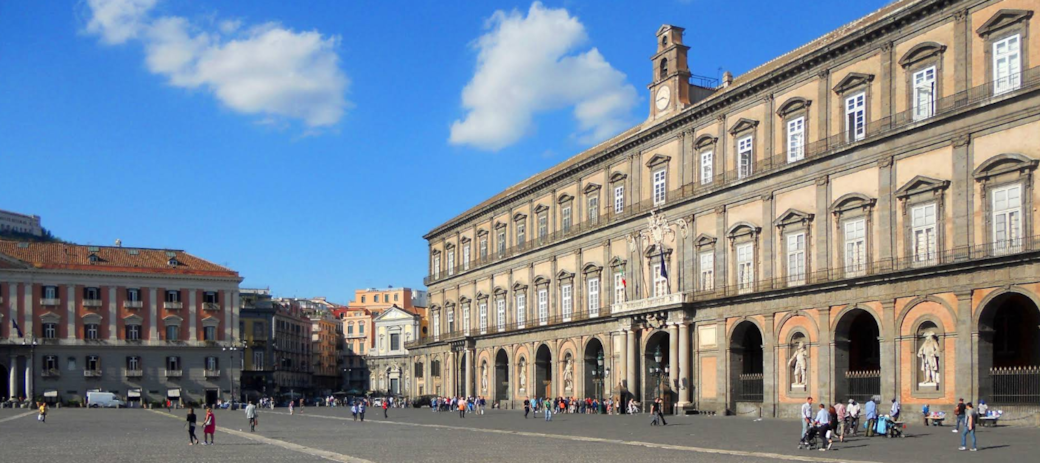
Palazzo Reale e l'Appartamento Storico
Commissioned by Domenico Fontana starting in 1600, this Viceregal and Bourbon royal palace houses a white marble grand staircase, Fuga’s Court Theatre, and state rooms featuring frescoes and original period furnishings, Gobelin tapestries, and Capodimonte porcelain. The Hanging Garden offers a magnificent view of the Bourbon pier and Mount Vesuvius.
A guided tour is highly recommended.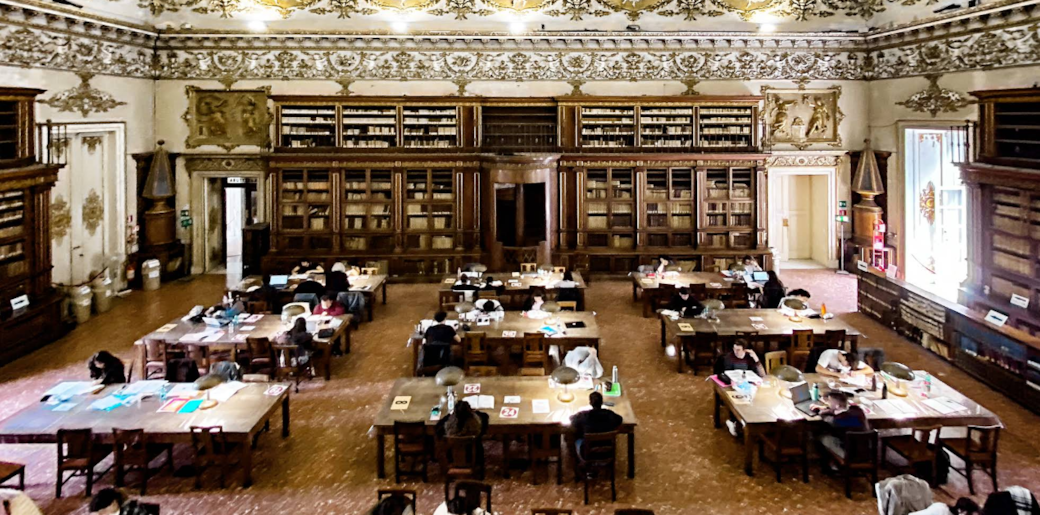
Biblioteca Nazionale di Napoli Vittorio Emanuele III
https://maps.app.goo.gl/ZWkadJ...
Housed in the eastern wing of the Royal Palace, it holds—in addition to monumental, frescoed reading rooms—an invaluable treasure: the priceless Herculaneum Papyri Workshop, which preserves the carbonized scrolls recovered from the Villa of the Papyri in Herculaneum that survived the eruption of Vesuvius in 79 AD, as well as the world's most extensive collection of manuscripts and autograph works by Giacomo Leopardi (including the autograph draft of *L'Infinito*).
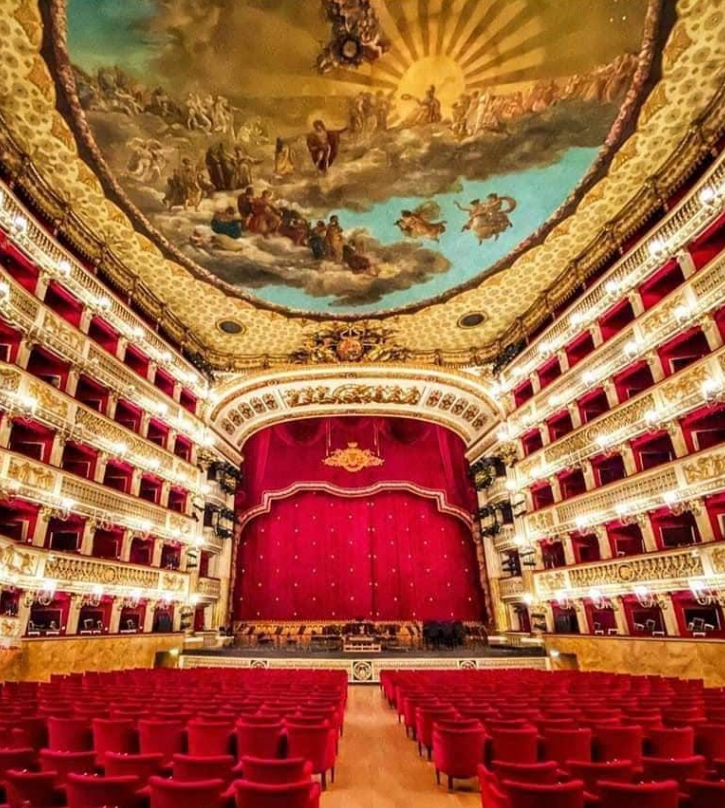
Teatro di San Carlo - the temple of opera
Directly connected to the Royal Palace, it is the oldest active opera house in Europe (founded in 1737, it predates La Scala in Milan by over forty years). A guided tour of the interiors—featuring the frescoed ceiling depicting Apollo and Minerva, the gilded boxes lined with red velvet, and the magnificent Royal Box—offers an unmissable acoustic and visual experience.
Practical tip: Daily guided tours take place at set times; booking your time slot online is recommended.
At the end of your visit, before heading back, treat yourself to an espresso at the counter of the historic Gran Caffè Gambrinus, located at the corner of Piazza Plebiscito. To return to Le Stanze di Dante, you can either walk back while browsing the shop windows along Via Toledo or take Metro Line 1 directly from Toledo to Dante (just one stop).